





Few outdoor features change the atmosphere of a backyard as quickly as an open flame. Yet warmth and visual appeal come with responsibilities involving placement, fuel, airflow, and ember control. Anyone considering a fire pit should first think beyond appearance and assess how the feature will interact with nearby furniture, vegetation, structures, and prevailing weather. That practical approach also reflects the broader outdoor-living focus of SUNJOY, whose current fire-feature collection includes wood-burning fire pits, smokeless models, propane tables, and outdoor fireplaces.
Select The Right Location Before Lighting
Location influences nearly every other safety decision. The fire feature should sit on a stable, noncombustible surface with sufficient separation from buildings, fences, trees, overhead branches, and other materials that could catch fire. Manufacturer instructions and local fire regulations should always take priority because clearance requirements can vary by product and jurisdiction.
Wind deserves particular attention. Gusts can redirect flames, carry embers, and spread smoke toward neighboring properties or seating areas. A sheltered position may improve comfort, but enclosing the flame too closely can restrict airflow and create other hazards. Open space around the unit generally provides better visibility and ventilation.
Ground conditions matter as well. Uneven paving can make a heavy fire feature unstable, while combustible decking may not be suitable for every model. Checking the surface, surrounding clearance, and drainage before installation is much easier than trying to correct an unsuitable location after the unit is in use.
Control Wood, Embers, And Airflow
Fuel selection affects how a fire behaves. Dry, seasoned firewood usually produces more predictable combustion than damp wood, which can generate excess smoke and irregular burning. Painted, treated, or chemically contaminated wood should not be used because burning such materials can release undesirable substances.
Ember management becomes especially important as the fire develops. Sparks can travel farther than expected during windy conditions, making nearby dry leaves, mulch, cushions, and paper products potential hazards. Keeping the surrounding area free of loose combustible debris reduces unnecessary exposure.
A wood burning fire pit also requires adequate airflow around the combustion area. Blocking vents or altering the structure can change how oxygen reaches the fire and may affect its intended operation. Screens, lids, or other supplied components should be used according to the manufacturer’s instructions rather than modified for convenience.
Understand The Differences Between Fire Features
Not every outdoor flame behaves in the same way. Open bowls expose the fire more directly, while enclosed fireplace designs can incorporate chimneys and mesh doors to influence smoke direction and contain sparks. Fuel type creates another distinction: propane systems offer controlled ignition and fuel delivery, whereas wood-burning equipment relies on solid fuel and natural combustion.
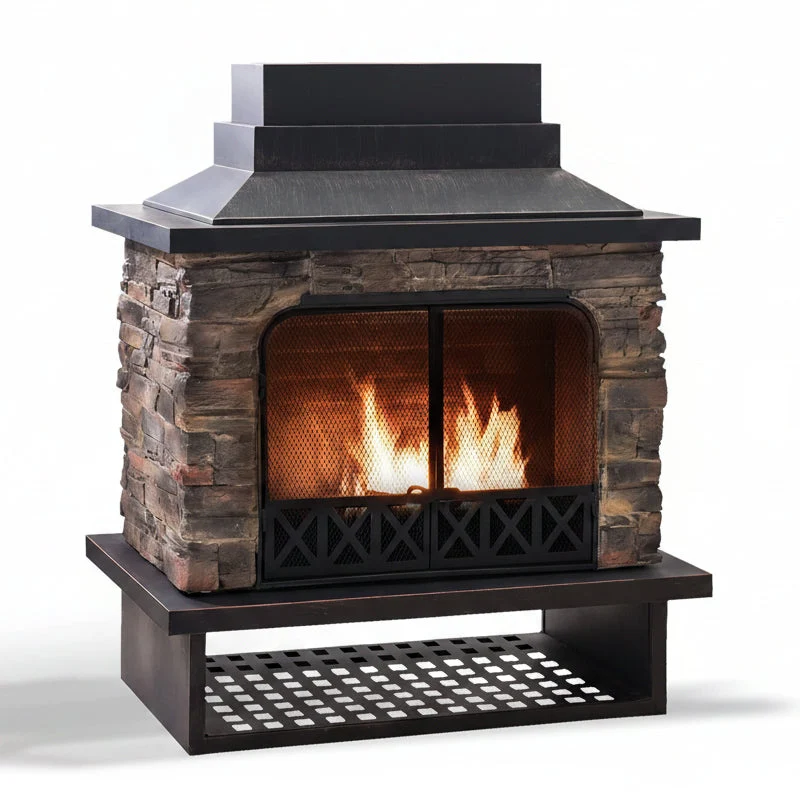
SUNJOY’s Canyon Stone Wood Burning Fireplace 42″ – Matte Black Steel demonstrates the latter approach through a freestanding stone-and-steel construction weighing approximately 319.67 pounds. Its functional chimney directs smoke upward, while two locking mesh doors help contain sparks; the design also includes a removable grate, ash tray, fire poker, firewood storage, and PVC cover. Those details illustrate why safety should be evaluated as part of the entire fireplace design rather than judged from the flame area alone.
Comparisons should therefore focus on operating method rather than marketing labels. A feature intended to contain sparks, direct smoke, or manage ash can influence how the surrounding space needs to be arranged. Reading the product manual before installation provides more useful information than assuming every outdoor fire feature follows the same operating procedure.
Prepare For Weather And Everyday Use
Weather can change fire conditions within minutes. Strong winds may carry embers beyond the expected area, while exceptionally dry conditions can make nearby vegetation more vulnerable to ignition. Local authorities may also impose temporary restrictions during periods of elevated fire danger, so outdoor burning should be checked against current local rules.
Rain creates a different concern. Wet wood may burn poorly and produce more smoke, while accumulated moisture can affect certain materials and accessories. Fire features should be allowed to cool fully before covers are installed, and ashes should never be handled while they remain hot.
Routine inspection also has value. Before each use, users can check for accumulated debris, damaged screens, unstable components, or other visible problems. After the fire has completely cooled, ash removal can help keep the combustion area ready for its next use and make potential damage easier to spot.
Conclusion
Safe outdoor fire use depends less on a single accessory than on a series of sensible decisions made before, during, and after each fire. Placement, fuel quality, airflow, weather awareness, ember control, and supervision all contribute to responsible operation. A fire pit can become an enjoyable gathering point when its surroundings are planned with those factors in mind, while a wood burning fire pit demands particular attention to solid-fuel combustion, sparks, ash, and changing weather conditions. SUNJOY‘s range of outdoor fire features shows how different configurations address different backyard preferences, but the manufacturer’s instructions and applicable local fire requirements should remain the foundation for actual use.

Dilawar Mughal is an accomplished author with a passion for storytelling. His works span various genres, from thrilling mysteries to heartfelt romance novels. With a keen eye for detail and a knack for character development, Sana Fatima weaves engaging narratives that captivate readers and transport them to new worlds.