Smart farms often use pumps, ventilation, lighting, refrigeration, sensors, and communication equipment at the same site. These loads do not always run together, so power demand changes through the day and across seasons. For managers considering an off grid hybrid solar inverter, parallel operation can be useful, but only when the farm needs more output and the complete energy system can support it.
Why Parallel Operation May Be Considered
A farm may start with one inverter and later add irrigation equipment, cold storage, processing machinery, or automated devices. If the original inverter reaches its practical output limit, installing another compatible unit in parallel can increase available power without replacing the whole system.
This approach can support phased expansion. Managers can add capacity when the farm grows instead of installing a much larger inverter at the beginning. However, the model must clearly support parallel operation. Compatibility between units, firmware, communication settings, and electrical design should be confirmed before installation.
Not every single phase solar inverter can be paralleled. The product manual should state the supported connection method, the number of units allowed, and the related wiring requirements. If this information is missing, managers should not assume that two units can operate together.
Load Analysis Comes First
Before adding another inverter, managers should review actual farm loads. Rated power is only one part of the calculation. Pumps, compressors, and some motors may require higher current during startup, so short-term peak demand also needs attention.
Operating schedules matter as well. Irrigation pumps may run only in certain periods, while refrigeration or ventilation can operate much longer. If major loads rarely overlap, the farm may not need additional inverter capacity.
For smaller greenhouses, remote monitoring points, or limited equipment rooms, a compact solar inverter may already meet the load requirement. In these cases, adding a second unit can increase system complexity without providing much practical value.
Future expansion should still be included in the calculation. Planned pumps, larger storage areas, or extra automation equipment can change the load profile. A realistic forecast helps managers decide whether parallel capacity is justified.
Battery and PV Capacity Must Support Expansion
More inverter capacity does not create more stored energy. If two inverters deliver a higher combined output, the battery bank must also supply the required current. Battery voltage, discharge capability, cable size, and protection devices should match the new power level.
PV capacity also needs to be checked. A larger inverter system may draw more energy than the solar array can produce during the day. If generation is too low, the farm may depend more heavily on batteries or grid input where available.
This is important in an off grid hybrid solar inverter system because the inverter, PV array, battery bank, and loads work together. Expanding only one part can create an imbalance and reduce the value of the upgrade.
Managers should review the full energy path before paralleling units. The calculation should include daily energy demand, battery runtime, charging capacity, expected solar input, and peak load.
Product Functions Can Support Farm Management
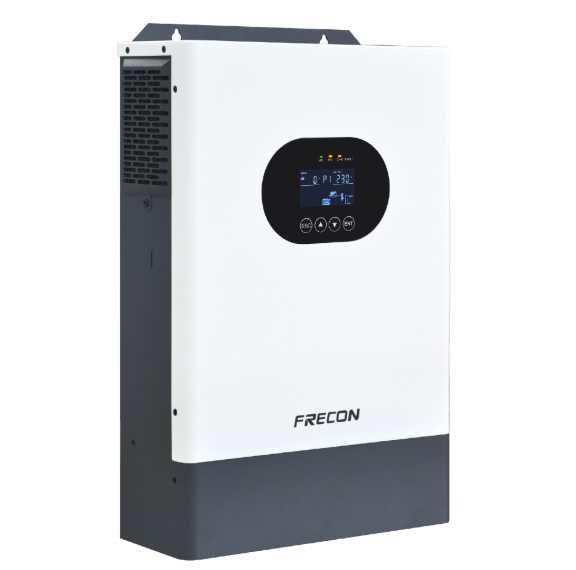
After the system requirements are clear, product functions can be compared with operating needs. FRECON offers the SP100 Solar Hybrid Inverter, which includes a built-in WiFi module for mobile APP monitoring. This can help operators review system status without visiting the installation point.
The SP100 also supports lithium battery activation, operation without a battery, and configurable priority between grid and PV. It has a wide PV input voltage range and can support PV feed-in to the grid where local policies allow it.
These functions are useful only when they match the project design. Grid-related settings depend on local rules, while battery functions depend on the selected storage system. Product features should therefore be evaluated as part of the overall farm energy plan.
Installation Details Affect Parallel Performance
Parallel inverter systems need coordinated wiring and communication. Units normally require matching settings so that power sharing remains stable. Mixing unrelated models or different operating conditions can create control problems.
Battery connections also need careful planning because several inverters may draw current from the same storage system. Cable length, conductor size, protection, and connection points should be reviewed together.
A single phase solar inverter may fit farms with single-phase loads, but managers still need to confirm that the chosen model supports the intended parallel structure. Parallel capability is a specific technical function, not a standard feature of every inverter.
Physical layout should not be ignored. Even when a compact solar inverter saves space, the installation still needs suitable ventilation, maintenance access, cable routing, and environmental protection.
When Parallel Operation Makes Sense
Smart farm managers should parallel inverters when real load growth exceeds the practical capacity of one compatible unit and when the battery, PV array, wiring, and protection system can support the added output.
They should avoid adding another inverter only for reserve capacity that the farm is unlikely to use. Load records, motor startup demand, battery capability, and future expansion plans should guide the decision.
For farms evaluating FRECON equipment, the SP100 can be considered where its monitoring, PV, battery, and source-priority functions match the project requirements. The final decision should still come from system calculations.
Parallel operation makes sense when it solves a measured capacity problem. If the existing system already covers present and near-term loads, improving system balance may be more useful than simply adding another inverter.
